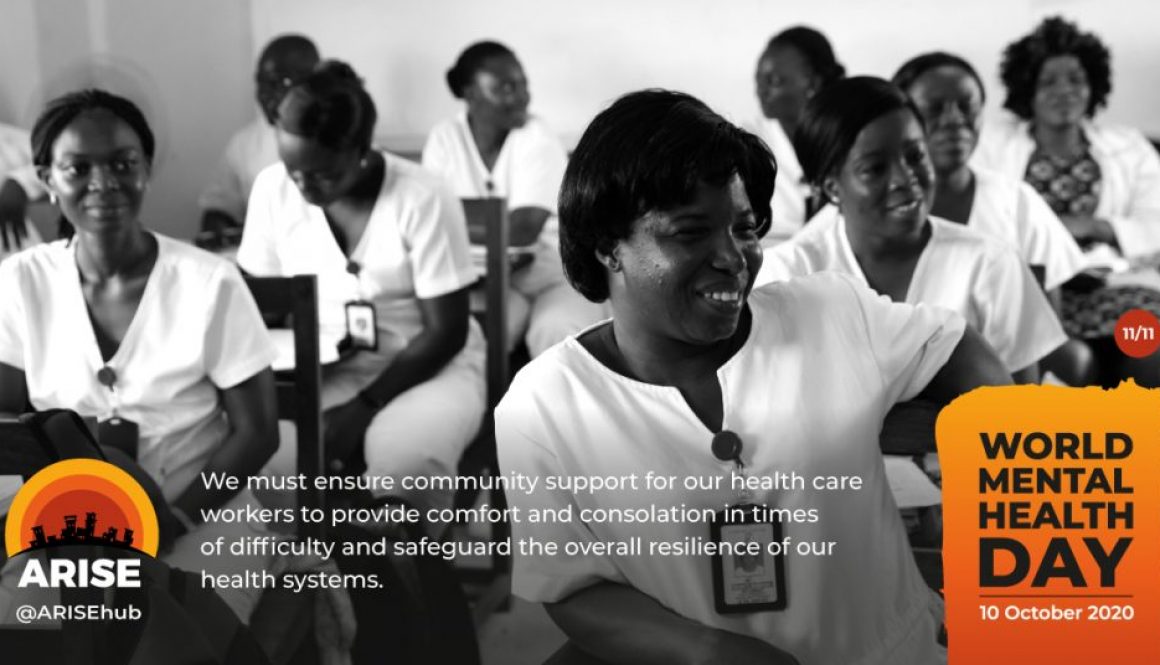
COVID-19 presents a time to redefine vulnerability; however, in discussions of vulnerability, the health workforce, particularly in regard to their psychosocial well-being, is often forgotten. Healthcare workers (HCWs) in fragile settings are constantly exposed to health system shocks, including; conflict, disease outbreaks and natural disasters, which compound the everyday challenges of working in an under-resourced health system. Based on a commitment to serve their communities, they often cope with repeated shocks and protracted crises through innovation and creative thinking. However, they also experience repeated acute and chronic stressors that can lead to psychological distress. For some, prolonged exposure to risk of psychological distress can lead to personal growth, for others, continuous exposure to chronic stress and uncertainty can lead to psychological injury.
Psychological impact cannot be reduced to personal resilience, rather it becomes linked to dynamic interactions between an individual and the structural and social circumstance within which they live and work; as well as the level and type of support they receive. HCWs are central to health systems responses to shock, becoming the medium through which policies and programmes become adopted or adapted. Yet the long-term psychological well-being of health-workers is seldom considered in planning for health systems resilience. HCW well-being is ultimately determined by structural factors and change that requires political will. Nonetheless, psychological support and attention to ways of alleviating distress throughout all phases of systems shocks is central to mitigating longer-term impacts on HCW mental health.
Sierra Leone and Liberia both experienced decades of conflict and fragility that have rendered fragile health systems and have undoubtably influenced the psychological well-being of their health workforce. They have few HCWs. Their communities are resilient yet vulnerable, and trusting relationships between governments, health systems and communities are precarious. Ebola is the latest in a series of historical traumas and health systems shocks. Now, global and local responses to COVID-19 may trigger anxieties and in some cases post-traumatic stress disorder among HCWs across Sierra Leone and Liberia. Such experiences may result from limited action to understand HCWs psychological trauma and a lack of aftercare to manage underlying psychological injury as a result of ongoing chronic stressors or stressors experienced during previous shocks.
Unbeknown to many, there are lots of connection between cities and health and this becomes even clearer in the face of pandemics. As has been said over and over again since the COVID-19 debut, epidemics reveal the reality of things. This view was reflected by most of the speakers during the ‘Webinar on Pandemics and Future Cities’ held on 5th October 2020.
With representation from across the world and all continents, one could not help but feel the sense of solidarity and unity brought about by the pandemic and the willingness to join efforts in its eradication.
In April the United Nations Human Settlement Programme (UN HABITAT) started work on a new flagship report – “The future State of Cities in a World with Pandemics” – to be launched during UN’s “Urban October” campaign 2020. Habitat Norway, in collaboration with UN Habitat and world leading experts, facilitated a presentation and discussion of the reports main findings, conclusions and recommendations. It focused on health, human rights, housing and humanitarian challenges.
A statement from the organisers read,
“The pandemic has triggered unparalleled global action and exposed stark social and economic inequalities and system weaknesses. It has shown that we have to abandon the old, normal way of dealing with global emergencies. It has highlighted that long term complex challenges and short term crisis demand new responses and ways of working. As we look ahead: what do we need to do differently? And what can we learn from the pandemic? What kind of collaboration and action are needed to achieve transformative change and prepare us for a radically different world? Cities will because of demographic and economic development be central.”
Participants from all realms including Civil Society Organizations, academia and government representatives met and discussed the new ways of working and living that need to be developed to tackle present and future crises drawing on lessons learnt from capacity building, advocacy and grassroots’ experiences.
To this end, Annie Wilkinson a member of the ARISE consortium, made a presentation – “Addressing systematic Poverty and inequality in Cities-the health challenge”. She started off by defining the urban health challenge which she said was largely a result of the growing urban population, especially in low- and middle-income countries. Inequality and poverty without a doubt present very negative impacts on health but unfortunately the health determinants in many of these urban settings are unknown to many. Most urban-health interactions are not paid attention to with very little being known on the most vulnerable people and settings especially the one billion people living in informal settlements.
Epidemics are a window into society and they reveal a lot with many wondering if COVID-19 will be a turning point. Annie explained that the way we deal with infectious disease has changed – moving from sanitary and infrastructural reforms to behaviour change and ‘silver bullets’ becoming increasingly disconnected from urban environments.
Drawing on learning from the Ebola epidemic in West Africa, Annie reflected on the challenges that the urban poor faced. She outlined the issue of urban neglect which facilitated spread of the disease, the ill equipped public health teams that could not manage the epidemic response, the histories of structural violence and inequality that led to distrust, violence and resistance. Most noteworthy, locally led control efforts are what eventually bent the curve of the epidemic. Ebola, just like many other pandemics, highlighted the social and political dimensions of health and the need for inclusive responses.
In the case of COVID-19 in informal settlements, people fear the spread of the virus but the greatest challenge is the lack of understanding of vulnerabilities and heterogeneity due to lack of data. Unfortunately, many of the blueprint response guidelines that were prescribed for COVID-19 were not practical and feasible for most populations and people in urban informal settlements. Most of the vulnerable were not reached by state support systems. However, social movements have worked hard and mobilized support networks to plan locally appropriate and inclusive responses. In most cases, this kind of support is made possible by long standing collaboration between residents and local authorities.
A focus on why cities, their inhabitants and urban health interactions are overlooked revealed that the attention and spending on urban development is very limited. The data on the most vulnerable populations and places is sadly very limited and an absence of policy frameworks on national urban policy omitted is from sectoral policies like in health and pandemic preparedness is a huge issue. Siloed expertise and politics of neglect that encompass exclusionary policy and practice and historic blaming of the poor are a huge contributing factor of this misunderstanding.
In order to understand the complex picture of inequality and systematic poverty in cities, we must acknowledge the homogenous social, political and economic relations that shape the urban spaces. Another factor that contributes to this complexity is the fact that drivers of health and wellbeing comprise intersections between environmental deprivations and hazards as well as social marginalization, stigma and violence. The governance in cities is also very complex across different sectors, administrative and spatial scales much of which is unknown and informal to many, making accountability a hard process. People in cities have diverse forms of power and agency and it is quite difficult to identify drivers of multiple, intersecting inequalities in health and wellbeing and routes of redress.
What then is needed to address this challenge? It is vital to increase investment, gather more data and attention to the issue. It is also paramount to have the right perspective; which will mean, as Annie put it, “seeing like a city”, like a citizen and also paying attention to what and who is not visible. Interdisciplinary, intersectoral and intersectional approaches are required, with special attention to power dynamics and the inclusivity of the most marginalized. Finally, there is need to focus on the social context and infrastructures which incorporates processes of learning dialogue and collaboration.
A one size fits all approach and generalization do not work in this case because cities are different, the settlements in them are varied and so are the populations and people.
By Jacob Omondi, Jackline Waithaka and Jane Wairutu
Globally, as of September 9, 2020 there have been 27,417,497 confirmed cases of Coronavirus reported to WHO. Efforts to slow the surge in cases and completely flatten the curve continue to be introduced at various scales however, the impacts of the pandemic have severely been experienced all around the globe.
Various reports note the COVID-19 outbreak, has greatly affected the labour market particularly the informal economic sector which harbors a large number of youth who now experience the negative impacts of the outbreak as a result of job losses and pay cuts. The pandemic has greatly devastated the youth, especially in informal settlements such as Mathare, Nairobi. Financial instability caused by contract termination and the evening curfew which affects a retailer’s booming business hours is among the main factors causing hardships for most youth who operate their businesses.
Residents in settlements such as Mathare, who often live from hand to mouth, are used to operating their business in the late-night hours. But they are now required to be home by 21.00 thereby reducing the hours where they would capitalize profits and businesses is at its peak. These businesses include the transport industry where the majority of the drivers and conductors are youths especially men, bar attendees who sell illicit brew (chang’aa) which is the backbone of Mathare’s economy. These jobs created employment for a lot of youths who could otherwise be rendered jobless and has resulted in a higher crime rate.
After the closure of schools as a measure to control COVID-19 there has been increased theft, more cases of teenage pregnancies, greater drug use, and more gang-related activity among youths. The rising trend among such groups has been attributed to the high unemployment rate amongst the youth both students and the ‘hustlers’ increasing social violence such as gender-based violence.
The story of Amos
Amos, a 22-year-old, talented artist and fashion designer from Mathare 4a, sought to sell coffee after the termination of his contract in a fashion firm he worked for. He expressed concern in his new business as it is yet to successfully pick up. A sense of uncertainty lingers as he thinks of his business’s future outcomes due to the low daily’s earning he can carve out. This is due to the low demand for coffee following the introduction of curfew, which has slowed down normal business operations during the booming business hours.
Unemployment has added to the increased rate of insecurity within Mathare. Amos has witnessed several scenes that bring about his fright for the dark. To him, this nightmare began when his and hundreds of other worker’s contracts were promptly terminated. He now has to risk finding customers within the now dangerous streets to earn a living.
The story of Stafford
Stafford Otieno a 28-year-old youth from Mathare said, “Finding a job has been one of my biggest challenges during this difficult pandemic period. I have applied for so many jobs but I have not been successful. Also, most of the jobs require years of experience and I do not have the exposure. I have realized here in Kenya if you don’t have connections or a godfather you can’t find a job.”
The stories of Daniel, Brian and the second Daniel
Many learning institutions around the world remain closed in an attempt to contain the spread of the COVID-19 virus. In Kenya, the education ministry directed the closure of schools in mid-March, three months after the school calendar had commenced. Six months on, various efforts have been channeled towards adapting to a new normal, online learning, as the government-run Kenya Institute of Curriculum Development continues to provide school programmes via the radio, television, and online.
The suspension of school by the government has made some Mathare based university students like Brian Opondo, Daniel Shitanda and Daniel Ongulo among others take up tutoring both primary and secondary candidates. They now have 25 students, whom they tutor within Mathare at a small fee of 100 shillings (KSH) per week to carter for administrative costs e.g. photocopy of the academic past paper for revision. This they do voluntarily while making use of the learning space granted by Canada Mathare Education Trust.
Prompting creative responses
As much as the pandemic has affected many, it has also helped, to an extent, in improving lifestyles as thousands of youth have embraced creativity and innovation, some proceeding to make a living out of it. Sectors such as fine arts by drawing murals, music through composition of inspirational songs, poetry composition and performance, artistic performances are now using social media platforms such as Facebook, twitter and YouTube. Such artistic performances are majorly geared towards attracting audiences and provide entertainment sources as well as educational and awareness creation platforms for the masses.
COVID-19 has impacted negatively on majority of youth, but hasn’t hindered their active brains from being inventive and innovative thereby portraying the possibilities of coping within the pandemic period and going further to also be able to earn a living. And this is only possible if they are empowered to do so by creating co-curriculum training facilities such as vocational and community training institutes. With proper measures, we can manage the drastic economic instability the youth are experiencing currently.
Cases of gender-based violence have been on the increase during the COVID-19 pandemic. This has not spared anyone including people who are living with a disability. As a deaf counselor, I have received many cases of clients who are going through a difficult time during this pandemic.
During a routine antenatal clinic visit, one of my young female clients approached me. She told me that she was having challenges. I was concerned since she is pregnant.
The young woman was jobless. She planned to join college again after delivering her baby. She would live with her parents who would help her and look after her child. The pandemic, however, increased her uncertainty. As if this was not enough, her boyfriend had lost his job too and was unable to support her at this time. The financial stress created tension between them that even resulted in emotional and physical violence. The conflicts and violence were a threat to their relationship.
At this time, I decided to offer mental health therapy to the young woman. We talked about her current situation, her health and wellbeing as a pregnant woman. After a lengthy discussion, she agreed that she needed to talk with her boyfriend on the importance of taking care of her, the relationship and the unborn baby now more than ever. We planned that I meet both together.
He accepted my invitation, and they came together for a counselling session. Since sexuality education is absent in Kenyan school curricula, I helped the boyfriend understand the partner’s situation and vulnerability as a pregnant woman. His violence against her was a risk to the unborn baby and the expecting mother. Stress could cause her a miscarriage and other complications. Through his violent acts, he put himself at risk of being arrested. During the counselling session, they agreed to look for alternative ways of earning a living. The boyfriend agreed to look for some casual job, while the young woman would follow-up on the funds that have been disbursed by the government in support of vulnerable members of the community during this pandemic.
I am against gender-based violence – it causes a lot of problems psychologically, emotionally, physically and literally affects the well-being of the family. Gender based violence results in self-esteem issues and traumatized individuals and children are mostly affected.
In my experience gender-based violence often results in sexual abuse and exposes the children to the same. Gender based violence prevents economic growth from the couple because of lack of empowerment. In other cases, it might result in untimely deaths, poor environment to the children and sexual diseases. Some women may engage in sex work to be able to economically support their family during these periods; this may exacerbate household tensions and associated violence due to a reliance on sexual relationships outside of the household.
Joseph Etyang is a Kenyan deaf man who works as a counselor with LVCT Health. He is involved in HIV and gender-based violence prevention programmers and supports the Nairobi deaf community through their support groups.
COVID-19 has forced a reckoning about how we live, and in particular how exposure to disease risks are unevenly distributed. This contribution explores connections between the COVID-19 pandemic, chronic disease and conditions of chronic crisis among the urban poor. We suggest two issues in urgent need of attention in the long and short term are: 1) the underestimated burdens of chronic disease among the urban poor, and 2) the protracted states of crises which contribute to these chronic conditions and their under-recognition. We contend that the burden of ‘pre-existing’ conditions in informal settlements is under-diagnosed and poorly managed in communities. In order to address these burdens, for COVID-19 and beyond, we must recognise they are a product of the protracted crisis which is everyday life for many of the urban poor, for whom illness is one of the many everyday struggles and consistent quality care is out of reach. For many people living on the margins, crisis is the norm, yet both this and its impacts on health are underestimated; for change to be realised, this must be the starting point.
The power of youth is the common wealth for the entire world. The faces of young people are the faces of our past, our present, and our future. No segment in the society can match with the power, idealism, enthusiasm, and courage of the young people.
The COVID-19 pandemic, a world-wide crisis, has shaken the world with its widespread dreadful effect on the humans. While the government of Bangladesh is busy with their vested interests, the youth of the country has taken responsibility for responding whole-heartedly on their shoulders.
In Bangladesh, the youth have come forward and responded to this public health emergency at local level to fight back the global pandemic. From the beginning of the pandemic, different youth-led organizations – Bidyanondo foundation, BacharLorai, Monerbondhu, Garbageman, BD Assistant have taken initiatives across the country along with the Government of Bangladesh and NGOs.
In rural villages and urban slums, they have participated in COVID-19 initiatives to protect their own communities. Unfortunately, unlike larger initiatives, those small-scale local level projects are not being highlighted though they are significantly contributing to their community.
Dholpur
Dholpur, a slum located in the southern part of Dhaka city under Dhaka South City Corporation, is the home of approximately 135,000 people and most of them are City Corporation cleaners, rickshaw pullers or daily wage earners. Many NGOs have been working there for a long time and have established schools, installed community latrines and water supply facilities, constructed roads, and so on.
They most often recruit local young people to work with them as volunteers or paid staff. However, NGOs’ activities are short-term, and the presence of public institutions is very limited so most of the problems the community face are either temporarily solved or remain unsolved. As a result, the young people of the slum have come forward to take actions. Anwar Rana, a 22 year old inhabitant of Dholpur slum, along with some other young inhabitants have established a local informal youth organization in 2019 named “Youth Associate” with the aim of improving the living condition. Now there are a total of 25 members who are directly or indirectly affiliated with different NGOs. Rana said:
There are many non-governmental organizations that work in our area, and they engaged many youths of our area in their activities. However, NGOs will not stay in our area for a long time. What will we do then? Hence, I discussed with other youths who also work in different NGOs, and we established this Youth Associate.
Youth Associate have carried out many social activities in Dholpur slum in collaboration with different governmental and non-governmental organizations, such as improving drainage system and building awareness on Dengue, child marriage and fire incidents in the slum.
In March 2020, when COVID-19 hit Bangladesh Youth Associate members also heard about this deadly virus and became anxious about the safety of their community. Moreover, the crowded settlement and poor living condition (living in a single room, shared kitchen and toilets, and lack of basic sanitary service) make them more vulnerable to the rapid spread of COVID-19 and following recommended preventive measures, such as maintaining physical distance, nearly impossible there.
Youth Associate members called an urgent meeting to discuss the COVID-19 situation and make their plan of action. They came up with some ideas – building hand washing facilities, creating social awareness, distributing masks, etc. However, as a voluntary informal organization, they did not have enough funds to execute their plan. Therefore, they decided to utilize their existing networks for mobilizing resources. Most of the Youth Associate members are affiliated with different NGOs and have been working for the development of Dholpur slum in close collaboration with the City Corporation, which gave them the strength and encouragement of seeking support from their organization and City
The first initiative Youth Associate took was building awareness about Covid-19 in the Dholpur slum. They printed posters and bought mikes with the money donated by the members. Youth Associate volunteers visited every corner of the slum, and did miking, posted posters on the wallsin different important locations inside the slum to inform their community people about preventive measures.
Their second target was to encourage Dholpur slum residents to practice hand washing as a preventive measure. Dholpur slum lacks proper sanitation facilities, which makes maintaining recommended hygiene practices difficult for the residents. As most of the inhabitants of Dholpur slum are City Corporation cleaners who were continuing their work, Dhaka South City Corporation (DSCC) took an initiative under the Livelihood Development Project for Marginalized People by installing some hand washing stations at the entry point of Dholpur slum to promote hand washing practice among the cleaners. Youth Associate volunteers assisted DSCC in selecting spots, installing hand washing stations and encouraging residents to wash their hands every time before entering to the slum.
Youth Associate volunteers have also been playing a crucial role in distributing relief goods among the poor households of Dholpur slum. They have been assisting government agencies and NGOs by making list of poor households, collecting food and cash as relief goods, and distributing those among the listed people. They also contacted local philanthropists, other larger volunteer organizations, Ward Counselors and local political leaders, and managed relief, especially food relief for the extreme poor households and marginalized people of Dholpur slum.
The rapid upsurge of COVID-19 in Bangladesh, meant a lack of personal protective equipment and a lack of financial support made Youth Associate’s activities difficult. Due to the high risk of getting infected because of the nature of their activities, the families of youth volunteers are now restricting their mobility which leads volunteers to lessen their activities. Instead of having all the challenges the youth volunteers are mentally satisfied with their contribution for the betterment of their community. Rana, the founder of youth associate said:
Although we are now working with the fear of being infected, it gives us mental satisfaction. We are happy that we can do something for our community people to save them from the deadly virus.
The activities of Youth Associate reflect that youth are capable of executing many excellent actions for their community, nations, and the world, even in the poor informal urban settlements. Young people are valuable assets for the nation. A country can develop its youth population as human capital by investing on developing their capacity and equipping them with knowledge and skills to fight against emerging challenges of the new era, which is fundamental to achieve the Sustainable Developmental Goals by 2030.
Freetown is home to over one million people, with over 68 informal settlements spread across precarious land spaces. These settlements are often built on marginal lands around sea fronts, dumpsites and on dangerous mountain peaks, which always constitute high risks, but are made worse during health emergencies.
Informal residents experience greater spatial inequalities than their formal counterparts. Inadequate provision of services including health, water and sanitation services highlight some of these spatial inequalities, which expose residents to different health circumstances.
Narratives about exclusion have pervaded city planning for a long time, causing a vertical relationship between informal dwellers and policy makers. There is a top-down relationship between city authorities and informal dwellers, which excludes informal residents from decision making. Often, there is confusion around response to emergencies in these marginalised spaces due to dearth of data on varying levels of marginality.
With COVID-19 spreading across communities, informal residents are not only at risk of contracting COVID-19 and other infectious diseases due to environmental conditions (including overcrowding) but are also experiencing loss of livelihoods as well as challenges in access to health, water and sanitation services. These conditions require quick response from city authorities to enhance an inclusive city planning and service delivery.
How has the city responded to COVID-19?
Response measures to reduce the spread of COVID-19 in Freetown have been fairly impressive. These measures include active case search and isolation, physical distancing and use of face masks. Social distancing has been enhanced mainly through nationwide lockdowns, curfews and inter-district travel restrictions. However, these response measures have been put in place with limited consultation with the vulnerable groups mostly living in informal spaces.
There have been gaps in providing a guided response that meets the needs and wellbeing of informal settlement dwellers. During the lockdowns in April and May 2020, we conducted phone interviews with co-researchers and other informal residents living in Dwarzark, Moyiba and Cockle Bay. The interviews focused on the state of the COVID-19 response and impact on health and wellbeing of residents across our research communities. We would like to highlight the exclusion of informal residents in current response planning. We observed during our discussions with residents that they were deeply concerned about not being able to meet their most basic needs due to restrictions on movement.
Healthcare access
There has been a drastic reduction in the number of visits to the health centres during the COVID 19 restrictions, especially amongst non-beneficiaries of free health care (FHC) provision. For many non-beneficiaries of FHC, access to healthcare was limited due to restrictions on vehicle movement and okadas (motor bikes providing easy access to non-motorable and high traffic areas) during the lockdowns. Fear of being sick or showing any visible symptoms related to COVID-19 has also affected access to healthcare for many community members.
Due to fear of being infected with COVID-19 and associated costs of seeking healthcare, people outside the FHC (adult males and females without disability and not non-Ebola survivors), self-medicated with medicines obtained from pharmacies and patent drug stores. Generally, people were afraid that their neighbours might call the emergency response number if they were found to be sick. Stigma around quarantine was one of the issues driving fear. There were general misconceptions about COVID-19 and its spread, which can only be addressed through sustained engagement with communities.
While residents were engaged in sensitizing their peers about seeking formal healthcare and maintaining confidence in the health system, their efforts were not synergised with health workers and responders. Sensitisation was done in parallel by informal residents and responders with minimal collaboration, and a lack of support for resident processes.
Community Health Workers bridged this gap and volunteered to provide much needed sensitization to residents to follow health regulations and to avoid being infected. Messages disseminated included hand washing, maintaining social distancing and visiting the health facility when they thought they were sick. Residents requested for training by health workers to prevent spread of COVID-19.
Food and livelihood challenges
Many informal residents in Freetown do not have sustained means of livelihood, and their income sources are linked to the informal economy. They survive mostly on hand to mouth and cannot afford food beyond a day. This makes stocking up on food very challenging. The relatively spontaneous lockdowns complicated the existing food access vulnerability of informal residents. Food prices increased rapidly in the periods before the lockdowns, and informal dwellers who rely on daily income suffered hunger. For example, the lockdown in May coincided with the Muslim fasting which contributed to the increase in food prices. In many of those circumstances, low income earners depended on their neighbours or relatives for help. A community resident remarked as follows in one of our interviews:
The food situation is bad for residents; I saw a young girl with a plastic bag looking for cooked food to buy for her family. I realized from that point that the girl’s family did not have raw food or rice at home to prepare for that day. I was worried that they might not have something to eat on the first day of the lockdown. At that time, we saw soldiers coming, so we ran away without being able to help to the young girl…As a widow and a single mother myself, it was not easy putting together some food for my children that will last us for three days. People are not happy, and the prices of food items are going up rapidly, so how can you manage to stock up food for a three-day lockdown. And moreover, this is a month of fasting when prices are generally high. (A widow at Moyiba)
Owing to the vulnerability of many informal residents, many experienced severe hunger. In Dwarzark for example, many residents including homeless children and people with disability were concerned that their needs are not often considered in planning, so it becomes even more difficult for them during crisis periods. Many of these groups depended on NGO and community support during crisis, but these streams of support were not forthcoming during the lockdown restrictions. During the second lockdown, homeless children had no shelter to live and many were begging in the neighbourhoods for food. Community elders however recognised these challenges and arranged for shelter at the community centre. Community elders also pleaded with residents who had enough food to provide for the homeless children.
Water and sanitation
Persistent lack of access to water and sanitation services are among the most frequent concerns of informal residents. Most settlements are not connected to the national water grid, so they access water from different sources, some of which are of poor quality. Water tanks supplied by government to communities through the Sierra Leone Water Company (SALWACO) were considered useless by community residents because they have not been refilled since the Ebola period, some five years ago. These access concerns became more challenging during the lockdowns. In their desperate search for water, many people ignored social distancing regulations. Many of them clustered around the few water access points.
Residents of Dwarzark queuing up for water during lockdown
In Dwarzark (one of the hillside informal communities), most of the wells dried up completely at the peak of the dry season in April, so most residents relied mainly on a solar powered tank to regenerate water. In Moyiba (another hillside community), youths in charge of public taps or ‘‘tap collectors’’ developed a strategy of closing the taps from time to time to control the huge crowds and to enhance even distribution. They devised a way of preventing multiple access by identifying people who had already collected. Those who could not withstand the huge crowds travelled to nearby communities to access water.
Children and women were mostly at the centre of water collection since schools had been closed by government to prevent spread of the virus. Children were therefore coming into contact with huge crowds during these interactions. Access to sanitation was also a challenge, since private indoor facilities are less common. Use of shared toilets or open defecation are widespread, which required people to risk leaving their homes or go to the streams or shared spaces. Moreover, outdoor toilets often exposed women and girls to sexual exploitation in informal settlements.
Security concerns
In addition to health, water and sanitation challenges, communities were also concerned about their security during lockdowns. Police and soldiers were deployed in communities to enhance adherence to response measures. Checkpoints were mounted with frequent patrols. There were incidents of beatings or arrests of people who ventured out to look for food and other basic needs by security personnel.
For many residents, the food situation was so dire that they had to plead with their neighbours for food or money to buy basic food items. Women and girls are likely to be particularly vulnerable to public and private violence. This is an area that needs further exploration as recent crime statistics from the Sierra Leone Police reveal high rates of sexual violence and penetration of women and girls in Freetown. Such incidents could be higher in informal settlements where safeguarding awareness is low, coupled with increased risk of gender based violence.
Lessons for future health responses
Communities, especially informal settlements experience immense pressure to meet their daily needs, including food, water and sanitation services. Yet, they are not well considered in urban policy planning and emergency response by city authorities.
In times of crisis, informal residents have shown much intuition to respond appropriately. With little resources, they provide relief support for their counterparts mostly in need of help. They organise fair distribution of scarce resources like water in accordance with social distancing regulations.
The current COVID-19 response has shown that limited involvement of informal residents in planning and the response has caused severe hardships. An inclusive process of city planning is imperative for a socially just response that meets the needs of all. Yet, communities feel disempowered because they have not been provided with much support to enhance their local actions in the fight against COVID-19. This account of community agency shows the strong capacity of communities in organizing themselves during emergencies or crisis to promote safe health behaviours and reduce spread of infections. Such actions could be leveraged upon by health professionals and policy makers to improve community surveillance and health promotion.
Special thanks to the following co-researchers who provided information and photos for this blog: Abu M. Sesay, Mohamed Bangura, Zakiatu Sesay Suad Kamara.
This is a recording of a live event that took place on the 1 July 2020 and was organised by UKCDR. This webinar was targeted at the international development research community. It aimed to raise awareness of the new guidance on safeguarding, increase understanding of the definition of safeguarding in the context of international development research and highlight how the research community can use it.
Speakers:
Marta Tufet, Executive Director, UKCDR
Sheila Mburu, Safeguarding Lead, Research & Policy Officer, UKCDR
Sarah Ball, UK Research & Innovation (UKRI)
Kerry Garfitt, Wellcome
Ben Raynor, Department of Business, Energy & Industrial Strategy (BEIS)
Kweku Ackom, Department for International Development (DFID)
Alison MacEwan, Department for Health & Social Care (DHSC)
Linnea Renton, Research Fellow on Safeguarding,Antislavery Knowledge Network, University of Liverpool
Prof. Sally Theobald, Liverpool School of Tropical Medicine, and ARISE – GCRF Accountability for Informal Urban Equity Hub
This Practitioner Brief has been produced based on the discussions and agreements that took place during the City Learning Platform (CiLP) meeting in February 2020. The meeting was hosted and coordinated by the Sierra Leone Urban Research Centre (SLURC), who also reported on the agreements.
Health is intertwined with living conditions in the city. Determinants of population health include inadequacies in the urban environment, especially linked with water, sanitation, and hygiene (WASH), waste collection, and housing conditions. Major health policies have historically not addressed these interlinkages, nor the specific concerns and circumstances of informal settlements, reflecting silos between health systems and urban stakeholders.
Improving health in Freetown requires an approach based on an engagement with residents of informal settlements about their health-related priorities, beliefs and experiences, as well as with already existing health support systems in the territories. This includes understanding and working with local and informal providers of health-related services, including local and traditional healers, and the use of participatory approaches.
There are important precedents and ongoing initiatives related to the management of previous health crises in Freetown – such as the Ebola outbreak – as well as in the daily activities residents are already undertaking to co-produce health services. Any approach to urban health should be built upon local lessons from those experiences.
There are important data gaps regarding the health conditions and determinants of health in informal settlements: practitioners and authorities should work with communities using participatory inclusive approaches to fill those gaps, ensuring that information from vulnerable marginalised groups is captured. This data would allow to identify priorities and health seeking behaviour, and design and implement health programmes, as well as improve monitoring of health service delivery and interventions by the Ministry of Health and Sanitation (MoHS).
Practitioners and authorities should approach health as part of a wider set of relations that take place within informal settlements, and with the rest of the city. Health is interdependent with livelihoods, housing and infrastructure, support networks, costs of mobility, personal bonds of care, societal norms and related vulnerabilities.
The concept, content and edition of this brief were developed by SLURC co-directors Andrea Klingel, Braima M. Koroma, and Joseph M. Macarthy, Research Officer Abu Conteh and Junior Researcher Mary Sirah Kamara; KNOW Research Fellows Stephanie Butcher and Camila Cociña, and KNOW Co-Investigator Alexandre Apsan Frediani. The first draft of the content of this Practitioner Brief was reviewed and commented by Annie Wilkinson and Haja Ramatulai Wurie. Layout developed by KNOW.